
NY
Nanuet
Detailed Woodwork That Enhances Structure and Appearance
Carpentry in New City and surrounding towns for custom trim, framing, and woodwork that require craftsmanship and precise fitting
Carpentry covers the range of woodworking tasks that shape how a home looks and functions, from structural framing that supports loads to finish trim that conceals gaps and adds visual detail. Buonaiuto Contracting provides carpentry services in New City and neighboring communities where accurate measurements, tight joints, and proper wood selection determine whether built-ins fit squarely, crown molding aligns at corners, or custom shelving supports weight without sagging. Projects that involve fitting wood components to existing walls, ceilings, or floors require adjusting for out-of-square conditions and compensating for settling or movement in older structures.
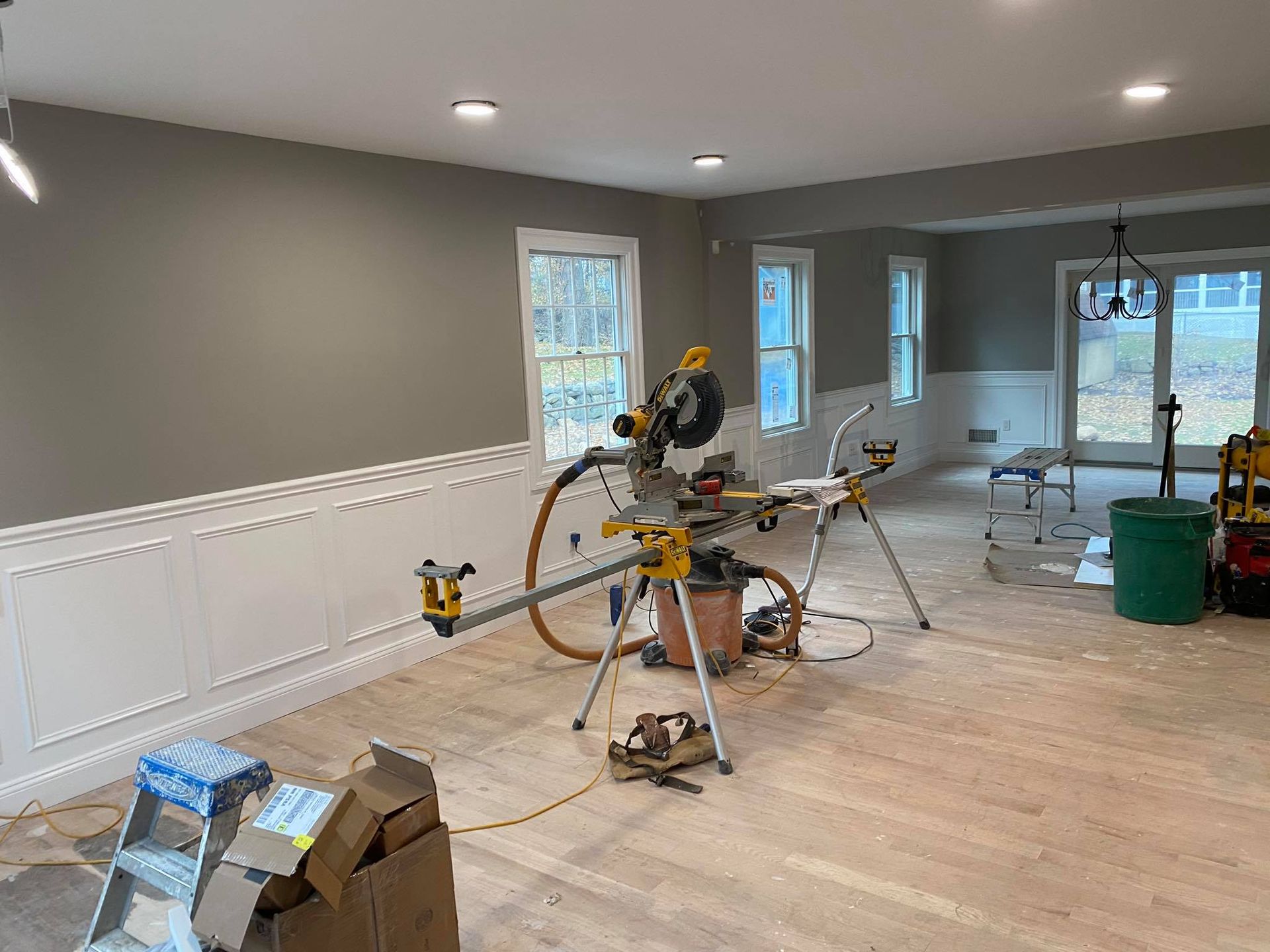
The work includes cutting and installing baseboards, door and window casings, chair rails, and crown molding with coped or mitered joints that close tightly without gaps. Custom carpentry extends to building closet organizers, shelving units, fireplace mantels, or wainscoting that matches the home's architectural style. Each joint—whether nailed, screwed, glued, or doweled—must be sized and fastened to handle the stresses placed on it, from door frames that resist daily use to stair railings that meet code requirements for strength and spacing.
Contact our office to discuss your carpentry needs and schedule an evaluation of the areas requiring custom woodwork or structural repairs.
What Proper Carpentry Includes
Trim carpentry begins with selecting materials that match existing woodwork in profile and grain, then cutting pieces to length with angles that fit wall corners accurately. Coping inside corners—cutting one piece to follow the profile of another—creates joints that stay tight even as wood expands or contracts seasonally. Finish nails are set below the surface and filled, then sanded smooth before painting or staining so fasteners become invisible in the completed work.
After carpentry work is complete, you'll see clean lines where trim meets walls and ceilings, doors that close without binding or gaps, and built-in elements that look intentional rather than added as an afterthought. Custom shelving will support books or storage bins without bowing, and stair components will feel solid underfoot without creaks or movement. Buonaiuto Contracting ensures that woodwork integrates with both the structural and aesthetic elements of your home, whether that means reinforcing floor joists before installing heavy cabinetry or matching historic trim profiles during renovation projects.
Carpentry also addresses repairs that other trades can't handle—sistering damaged joists, replacing rotted window sills, or rebuilding sections of wall framing compromised by water intrusion or structural movement. These repairs restore the integrity of the building envelope and provide sound attachment points for finish materials, preventing recurring problems that stem from underlying structural deficiencies.
Answers to Frequent Service Questions
Homeowners planning carpentry projects often want to understand the scope of work, material options, and how custom solutions are developed for specific spaces.
What is the difference between rough carpentry and finish carpentry?
Rough carpentry refers to structural framing, floor joists, and wall studs that will be covered by other materials. Finish carpentry includes trim, molding, and visible woodwork where joints and surfaces are sanded, filled, and prepared for paint or stain.
How are custom built-ins designed to fit specific spaces?
Measurements are taken at multiple points since walls and floors are rarely perfectly square or level. Custom pieces are built to fit the actual dimensions and angles of the space, with scribing techniques used to follow irregular surfaces and ensure tight contact.
When should carpentry repairs be prioritized over replacement?
If the underlying structure is sound and only surface or cosmetic damage exists, repair is often more cost-effective. However, components with rot, insect damage, or structural failure typically require replacement to restore full strength and durability.
What wood species are commonly used for interior trim carpentry?
Paint-grade trim often uses poplar or MDF for smooth surfaces and cost efficiency, while stain-grade trim uses oak, maple, cherry, or other hardwoods selected for visible grain and color. The choice depends on the desired finish and budget considerations.
Why do trim joints sometimes open up after installation?
Wood movement from seasonal humidity changes causes expansion and contraction. Joints that were cut tightly may develop small gaps during dry winter months when wood shrinks, and close again when humidity increases. Properly coped joints minimize visible separation compared to simple miter cuts.
Buonaiuto Contracting completes carpentry projects throughout New City and surrounding towns for homeowners who need structural work, custom trim, or detailed woodwork tailored to their specific project requirements. Reach out to our team to review your carpentry scope and material options.